
IV Episode 1a
Beauty as a Daily Discipline

How small acts of grace steady the inner world
Beauty is often treated as something extra.
Something to admire when time allows. Something pleasant to add after the practical matters are handled.
But lived experience suggests otherwise.
Beauty is not always an ornament.
Sometimes it is maintenance.
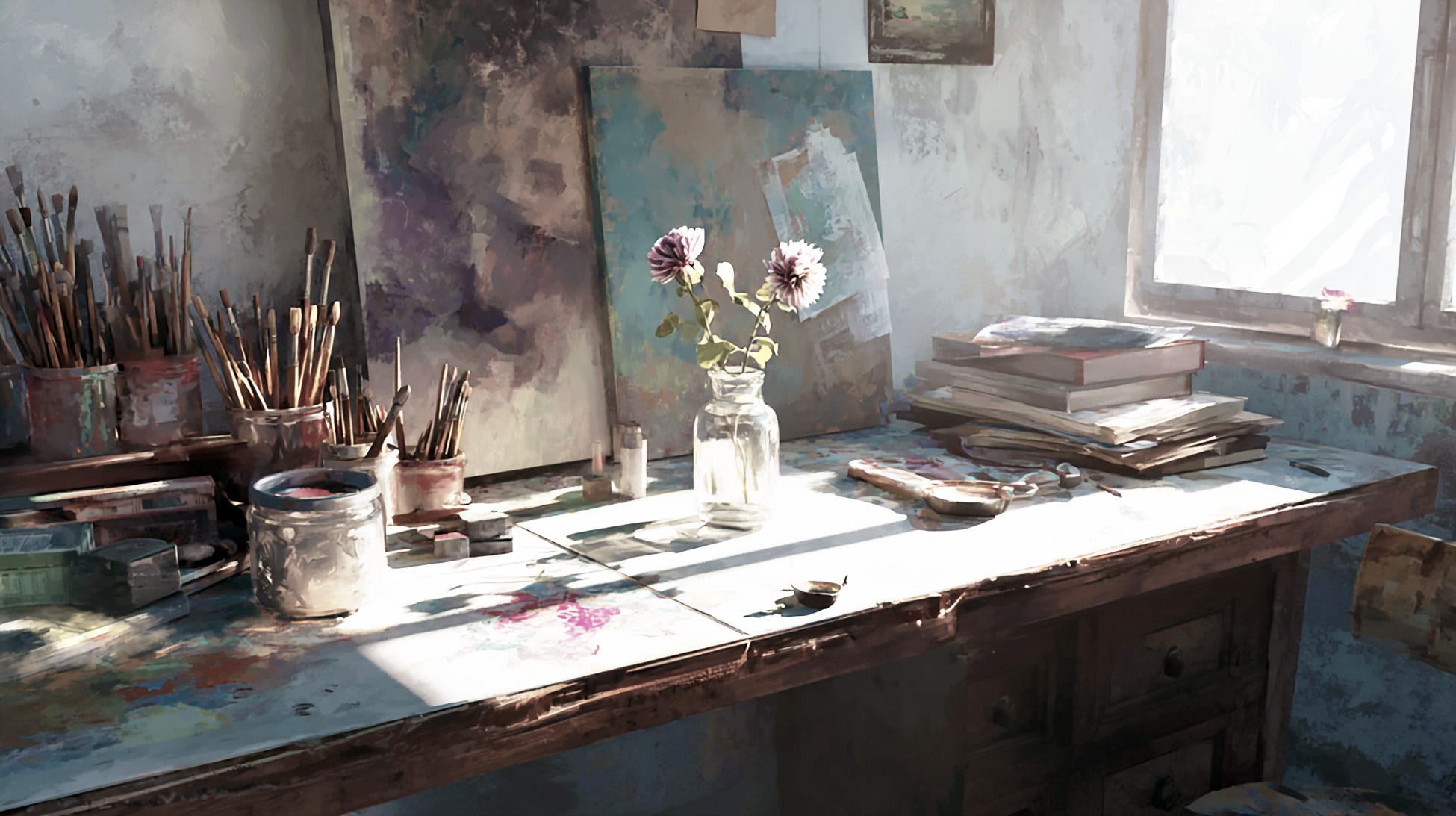
Many people think of discipline as effort, denial, grit, and repetition. There is truth in that. Certain forms of growth do require steadiness, restraint, and showing up when mood would rather wander.
But there is another kind of discipline that receives less attention.
The discipline of creating conditions in which the better parts of you can more easily appear.
A cluttered room can shape thought.
So can a harsh one.
So can constant noise, visual disorder, unfinished piles, careless objects, stale air, neglected corners, and the subtle message these conditions send:
No one is tending this life.
We may not say those words aloud, but environments speak continuously.
And we are listening more than we realize.
The reverse is also true.
A cleared table.
Fresh air through an open window.
Light falling across a floor that has been swept.
A candle lit at dusk.
Music chosen instead of defaulted to.
One flower in a simple jar.
A chair placed where morning can be noticed.
These are small things.
Yet small things often carry the atmosphere of a life.
I’ve learned this repeatedly in the studio.
There were days when painting felt resistant. The hand was tense, perception dull, impatience close by. In those moments, technique was not always the missing element.
Sometimes the room itself needed attention.
Brushes cleaned.
Table cleared.
Window opened.
Light adjusted.
Silence restored.
Only then did I realize I had not been struggling with the work as much as with the conditions surrounding it.
The mind had become shaped by disorder and was trying to create from inside it.
This applies far beyond art.
How we begin the day matters.
What our eyes meet repeatedly matters.
What tone fills the home matters.
Whether beauty is present in modest forms matters.
Not because life must be curated into performance.
Because the nervous system responds to signals.
And beauty, rightly understood, is one of those signals.
It tells us:
There is care here.
There is rhythm here.
There is enough steadiness to notice.
This is especially important in difficult seasons.
When grief has entered the house.
When loneliness lingers.
When motivation thins.
When the future feels uncertain.
During such times, people often abandon beauty first. They stop tending the room, the table, the self, the little gestures that once carried grace.
That is understandable.
It is also when beauty may be needed most.
Not grand beauty.
Simple beauty.
The kind that asks little and gives quietly.
After loss, I noticed how much a room could affect the heart.
Some spaces made sorrow heavier. Others gave it room to breathe.
A certain chair by a window. A clean surface. Evening light. A familiar object placed with care. Silence that felt companionable rather than empty.
None of these erased grief.
But they changed the way grief was held.
That is no small thing.
Beauty as discipline does not mean perfection.
It does not mean expensive taste, spotless homes, or performing serenity for others.
It means choosing, where you can, to place signs of order, care, proportion, and presence into daily life.
It means refusing to let neglect become the atmosphere.
It means remembering that surroundings shape consciousness.
A beautiful life is rarely built through dramatic gestures.
More often, it is built through repeated small ones.
Washing the cup and setting it back well.
Opening the curtain.
Straightening the sheet.
Choosing words with care.
Lighting the candle instead of scrolling.
Playing music that enlarges the room.
Keeping one corner honest and calm.
These actions seem minor.
Yet they train identity.
They say:
I am still here.
I still participate.
I have not handed the day over to drift.
There is quiet dignity in that.
And dignity, too, is a form of beauty.
Perhaps this is why small rituals matter so much.
They are not empty habits when done consciously.
They are reminders that inner life can be supported outwardly.
That grace often enters through ordinary doors.
That beauty, practiced daily, becomes less about appearance and more about relationship.
A relationship with your own mind.
Your own space.
Your own deeper standard for how life is lived.
When people speak of changing their lives, they often imagine dramatic turning points.
Sometimes change begins more modestly.
With a broom.
With fresh water in a glass.
With one cleared surface.
With the decision to make the next hour a little more beautiful than the last one.
That may sound small.
It is not.
Small acts repeated become atmosphere.
Atmosphere repeated becomes character.
Character repeated becomes fate.
Let’s Look Closer
Where has neglect quietly become normal in your environment?
What one small act of beauty would restore a sense of care today?
Tiny Exercise:
Choose one area you see often—a desk, bedside table, kitchen counter, doorway, car seat, garden step. Spend ten minutes bringing order or beauty to it. Then pause and notice whether your inner state changes with the outer one.