
The Watchtower
A Parable About Seeing and Responsibility

Heartlight: Season IV — Afterword
Throughout this season, we have explored the craft of seeing...
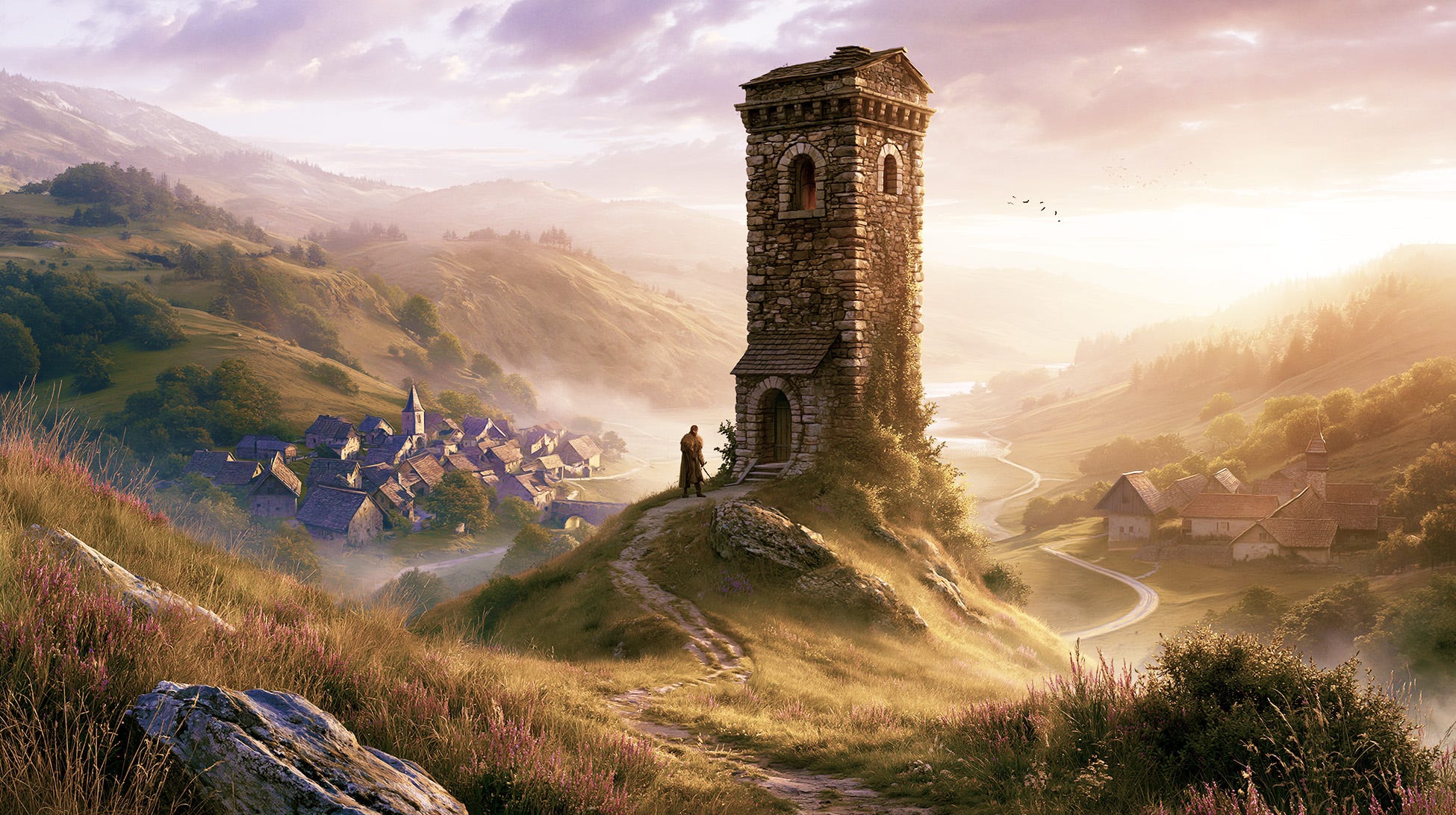
The watchtower stood on the highest hill overlooking the village.
No one remembered who had built it.
The oldest records spoke only of a time long ago when raiders crossed the plains without warning. Entire harvests disappeared overnight. Homes burned. Families fled into the surrounding hills.
Then someone raised the tower.
From that day forward, a lookout climbed the winding staircase each morning and watched the horizon.
The system worked so well that it became a tradition.
Generations passed.
The raiders stopped coming.
The tower remained.
Every dawn, a villager climbed the steps.
Every evening, they climbed down.
And every year, during the Harvest Festival, the village honored the lookout who had served most faithfully.
Travelers often stopped to admire the tower.
One such traveler arrived late one autumn.
After settling into the inn, he asked the innkeeper about the structure on the hill.
“The watchtower keeps us safe,” the innkeeper said.
“From what?”
The innkeeper shrugged.
“Danger.”
The next morning, curiosity led the traveler up the hill.
Inside, he found an elderly woman seated beside a brass bell.
The windows faced every direction.
Fields stretched across the valley below.
The woman greeted him warmly and returned to her vigil.
“What do you watch for?” he asked.
“Anything that threatens the village.”
As the day passed, she pointed out things he would have missed.
A section of fence collapsing near the northern pasture.
Smoke rising from a distant field.
A child wandering too close to the river.
A lone rider whose horse appeared injured.
Each time she rang the bell.
The villagers responded immediately.
The fence was repaired.
The field fire extinguished.
The child escorted home.
The rider welcomed and treated.
The traveler was impressed.
The tower, he realized, was not merely a relic. It still served a purpose.
Then, late that afternoon, the woman grew quiet.
Far below, along a narrow lane, an old man walked slowly toward the edge of the village.
No one accompanied him.
No one waved.
No one seemed to notice him at all.
The woman watched for a long moment.
Then she looked away.
“You didn’t ring the bell.”
“There is no bell for that.”
The traveler followed the old man’s progress until he disappeared among the trees.
The next day a young farmer took the watch.
Again, the traveler climbed the tower.
Again, the lookout noticed things others overlooked.
Again, the bell rang.
Near noon, the farmer stared toward the marketplace.
“What is it?” the traveler asked.
The farmer hesitated.
“Nothing.”
But the traveler saw his expression.
“What did you see?”
The farmer sighed.
“The baker’s wife.”
In the square below, a woman arranged loaves on a table.
She smiled whenever customers approached.
Yet something in her movements seemed heavy.
Tired.
Alone.
“You should ring the bell.”
The farmer shook his head.
“There is no bell for that.”
Days passed.
Each lookout noticed different things.
An argument between brothers.
A widow eating alone.
A boy pretending not to be afraid.
A teacher hiding her exhaustion.
Each time the lookout saw.
Each time the lookout remained silent.
And always the same explanation followed.
“There is no bell for that.”
On the morning of his departure, the traveler climbed the tower one final time.
The village elder happened to be on duty.
Together they watched the sun rise over the fields.
At length the traveler asked a question.
“Why was the tower built?”
“To help us see danger.”
“And once danger was seen?”
“The village acted.”
The traveler nodded.
Then he pointed toward the valley.
“Your people still act when the bell rings.”
“Of course.”
“But I have noticed something.”
The elder waited.
“Over the past week, everyone in this village has shown me things that need attention.”
The elder said nothing.
“The lonely. The grieving. The frightened. The forgotten.”
The traveler turned toward him.
“You see them.”
“Yes.”
“You simply do not ring the bell.”
For a long time, the elder watched the village below.
The marketplace was beginning to fill.
Children crossed the square.
A woman swept her porch.
A baker opened his door.
Ordinary life.
At last, the elder spoke.
“Perhaps we have forgotten what the tower was for.”
The traveler smiled.
“Or perhaps you remembered only half of it.”
That evening, before leaving, the traveler heard a bell ring across the valley.
Once.
Twice.
Three times.
People emerged from their homes, puzzled.
There was no fire.
No rider.
No approaching storm.
Only an old man sitting alone beneath a tree at the edge of the village.
One by one, the villagers began walking toward him.
Years later, no one remembered the traveler’s name.
But they remembered the second bell.
And they taught their children that seeing a need was not the same as answering it.
The purpose of sight, they said, was never warning alone.
It was invitation.